
Digital Trade Insights Q2 2026
In our latest quarterly issue: Major legislative momentum supporting digital trade builds, as key trading countries make meaningful progress towards enacting MLETR-aligned reforms recognizing eBLs; digitalization accelerates across additional shipping & trade use cases, from chamber-issued digital carnets to fully digital maritime certification and tanker inspection regimes; industry voices reframe the future of trade finance as a nexus of intelligent, interoperable ecosystems – plus much more! + SUBSCRIBE
Industry News & Views
 China adopts new provisions on electronic documents, effective 1 September 2026: Unpacking China’s newly adopted Provisions on Electronic Documents, effective 1 September 2026, which together with the revised Maritime Code establish a legal framework for electronic transport and trade documents, including eBLs (source: Reed Smith).
 ICC launches tracker to map digital cargo document treaty progress: The ICC DSI, alongside UNCITRAL and UNESCAP, has launched a tool mapping each economy’s progress across six stages towards ratifying the UN Convention on Negotiable Cargo Documents, with 28 economies already engaging and 10 signatures needed for entry into force (source: GTR).
 Proposed Overhaul of Thailand’s Electronic Transactions Act - Modernizing for the Digital Economy: Panisa Suwanmatajarn of The Legal Co provides details of Thailand’s Bill amending its Electronic Transactions Act (ETA), including the proposed adoption of principles from MLETR relating to ‘e-transferable instruments’ (source: The Legal Co. via Lexology).
 Why Automotive Logistics Can’t Stay Paper-Based Anymore: ICE Digital Trade customer, Giga Maritime Group (GMG), reflects on its journey to digitalizing logistics operations, and why paper-based processes are no longer viable for automotive supply chains (source: Giga Maritime Group via LinkedIn).
 Digital ATA Carnet launches in 30 countries: ICC’s digital ATA Carnet system (eATA) went live on 1 June 2026, beginning the transition from paper carnets – which allow temporary duty & tax-free admission of cross-border goods for up to 1 year – across 30 countries spanning the 27 EU member states, Norway, Switzerland, and the UK (source: ICC WBO).
 Enabling digital trade through legal reform: A guide for policymakers and practitioners: Recent guide developed by the ICC Digital Standards Initiative (DSI) aims to provide trade stakeholders a clear, practical introduction to MLETR and how legal reform enables the use of electronic transferable records (ETRs) across global trade & trade finance (source: ICC WBO).
 Global Trade Update (May 2026): Invisible barriers – the costs of non-tariff measures: Examining how non-tariff measures – regulations, standards and product requirements – now drive most trade costs, shaping who trades and with whom, and creating a double burden for developing countries (source: UNCTAD).
 Video Interview – Fess up time: Is digital trade finally changing?: Oswald Kuyler, Senior Digital Trade Advisor at the Asian Development Bank (ADB), makes the case for why, after five years fixated on platforms, trade finance must stop treating digitization as a talking point and start treating it as a prerequisite (source: TTP).
 Demand for letters of credit surges as data centres scramble for power: Demand for big-ticket, syndicated letters of credit is soaring in the US, according to those involved in the transactions, as utility companies and power grid operators seek credit protection for huge power supply contracts signed with data centre developers (source: GTR).
 A Practical Guide to Documentary Collections: Understanding Documentary Collections in International Trade: oint ICC, BAFT and TTP publication offers a clear, practitioner-led explanation of how Collections work under URC 522, alongside the shift towards digital documentation under eURC 1.1 and MLETR-aligned frameworks (source: TTP).
 Best Practices in Mitigating Fraud in Transaction Banking: Recent BAFT white paper offers practical, industry-driven guidance to help financial institutions strengthen defenses across payments, trade finance and onboarding, addressing risks arising from AI-enabled social engineering, trade document fraud, mule networks and more (source: BAFT).
 BIMCO launches seafarer digital certificates charter: Aimed at supporting and promoting the maritime industry’s transition towards interoperable digital certification frameworks for vessel crews, following the addition of seafarer and STCW certificate data to the IMO Compendium at FAL 50 (source: Smart Maritime Network).
 Critical minerals are reshaping global trade as demand surges: UNCTAD’s June 2026 Global Trade Update examines how governments are responding as demand rises for the critical minerals essential to electric vehicles, battery storage, renewables, semiconductors and data centres (source: UNCTAD).
 Global oil supply to plunge below demand this year due to Iran war, IEA says: The International Energy Agency warns that global oil supply will fall short of demand this year as the Iran war disrupts Middle East production and drains inventories at an unprecedented pace, upending its earlier surplus outlook (source: Reuters).
 Bank of England drops individual holding caps in stablecoin rules rethink for 2027: he BoE’s 22 June policy statement and draft code of practice for systemic sterling stablecoins scraps individual wallet caps – a contentious proposal for many stablecoin advocates – replacing them with a temporary £40 billion ($53bn) issuance limit per coin (source: Global Government Finance).
 OCIMF Annual Report 2026: SIRE 2.0 impact is becoming clear: Reflecting on the shift from a long-established paper-based system to a fully digital tanker inspection regime, where the biggest hurdle proved cultural, yet industry engagement has delivered a more transparent, efficient and insightful process (source: Safety4Sea).
 The Future of Trade Finance - From Digitisation to Intelligent, Interoperable Ecosystems: Capgemini’s Andrew Coles frames the transformation of trade finance as a shift across three dimensions – from digitization to intelligence, products to platforms, and isolated institutions to interconnected ecosystems – and what it means for banks (source: Anrew Coles via LinkedIn).
ICE Digital Trade News
 ICE Launches ICE GreenTrace™ its New Environmental Registry Technology Service: Bringing financial market infrastructure to the lifecycle of environmental instruments – including carbon credits, emission allowances and Energy Attribute Certificates – enabling market participants to invest in and manage these assets with confidence (source: ICE).
 Case Study – From Paper to 95% Digital: How the Latvian Chamber of Commerce Transformed Certificate of Origin Issuance: Featuring figures and insights from Latvia’s principal issuer of non-preferential Certificates of Origin, representing over 8,000 members, on its journey to 95% digital issuance (source: essCert).
 3 Questions with the South Australian Business Chamber: The South Australian Business Chamber's Manager of International Services, Maggie Li, reflects on the shift from paper to digital Certificates of Origin, what it means for exporters today, and what the Chamber needs to stay ahead (source: essCert).
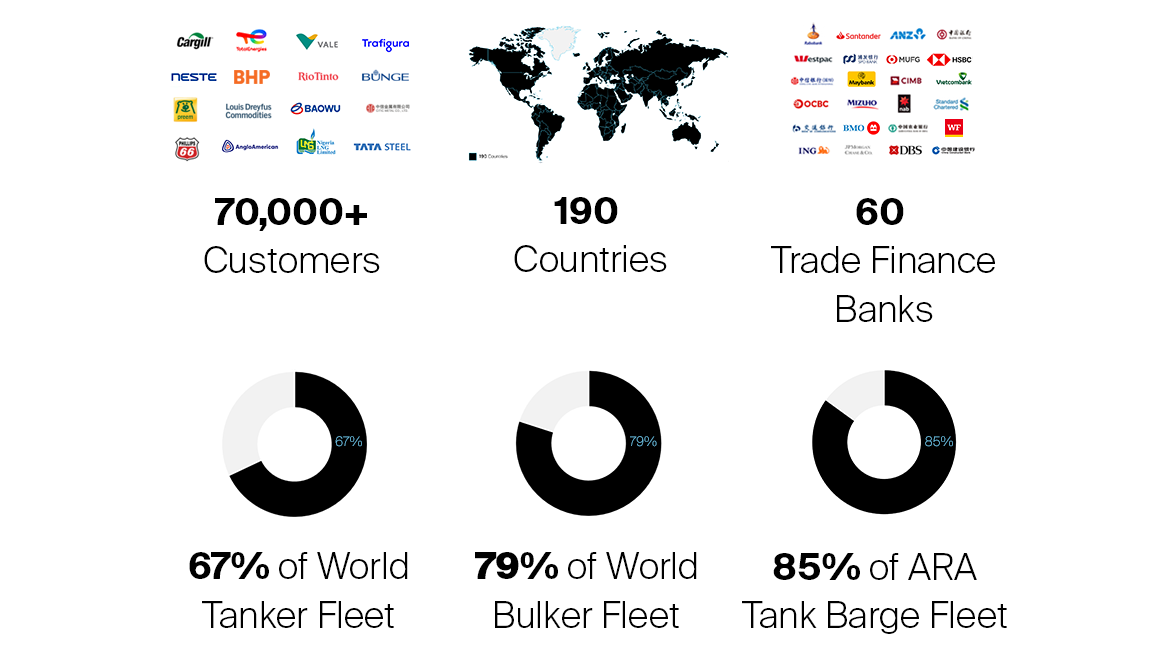
ICE Digital Trade in Numbers